A jewelry armoire should protect your necklaces, not turn them into a crowded metal knot. Many owners open the doors and find chains layered across drawers, pendants hidden underneath, and clasps caught together. The problem often comes from storing every piece flat. Necklaces need separation, visibility, and enough room for their chains to rest naturally.
Professional organizer Julie Morgenstern offers a useful principle: “Organizing is not about getting rid of everything you own or trying to become a different person. It’s about living the way you want to live.” That idea applies directly to jewelry storage. You do not need to discard meaningful pieces. You need a system that matches your habits, collection size, and armoire design.
This guide explores five practical ways for How to organize necklaces in a jewelry armoire without tangling. We will consider individual hooks, divided compartments, soft pouches, vertical panels, and careful spacing. Each method works differently. A long chain may need a hook, while a delicate pendant may prefer a pouch. Test the arrangement with your most-worn pieces first. It may look imperfect. That is acceptable.
Leave space between neighboring chains. Keep pendants facing outward when possible. Fasten clasps before storage, but do not pull chains tightly. A small mistake can create tension, scratches, or hidden knots. Also, some advice oversimplifies the process. One solution rarely suits every necklace. Your armoire should remain easy to use, even on rushed mornings. Practical organization matters more than a picture-perfect display.
Assessing your necklace collection is the practical starting point for organizing a jewelry armoire.
The National Retail Federation’s 2024 Mother’s Day survey reported that 23% of shoppers planned to buy jewelry. Your collection may grow faster than expected. Take every necklace out and place it on a clean towel. Record its length, material, clasp condition, and wearing frequency. Note the forgotten pieces.
Measure the armoire’s usable depth, drawer height, and hanging space. Do not count decorative trim or blocked corners. A necklace needs room to hang without touching the drawer below.
The Gemological Institute of America recommends protecting jewelry from scratches, moisture, and unnecessary contact. That supports using separate hooks, soft-lined compartments, and breathable pouches. Avoid overcrowding.
Sort necklaces into daily, occasional, sentimental, and repair groups. Keep long chains near the tallest section. Place short pendants in individual slots.
The 2024 U.S. retail jewelry outlook from Circana identified jewelry as a resilient discretionary category, suggesting frequent collection changes and additions. Leave roughly 20% of the armoire empty for future pieces.
I used to fill every space, and tangled chains followed. That mistake is easy to repeat.
A quick monthly check can reveal broken clasps, tarnish, or storage that no longer fits your habits.
Sort necklaces by length, style, and frequency of use to make your jewelry armoire easier to manage. The McKinsey and Business of Fashion State of Fashion: Watches and Jewellery 2023 report projected annual jewelry growth of 5% to 6% through 2025. A growing collection needs structure, not more clutter.
Begin with length. Place chokers and short chains on upper hooks, then arrange medium and long necklaces below them. Leave enough space for pendants to hang freely. GIA recommends keeping jewelry separated to reduce scratches, tangling, and surface damage. Use soft-lined sections for delicate chains. Longer pieces may need individual hooks or slim pouches. They tangle quickly.
Sort the remaining pieces by style. Keep everyday chains together, then separate statement necklaces, pendants, and sentimental pieces. Store frequently worn items near eye level. Reserve lower compartments for occasional pieces. A small card showing the category can help during rushed mornings. My own weak point is over-sorting; too many categories slow the routine. Three or four style groups usually work better. Recheck the armoire every month, especially after travel or seasonal changes. The system should support real habits, not an idealized wardrobe.
| Organization Method | Best Sorting Dimension | Recommended Armoire Storage | Ideal Necklace Types | Key Benefits | Maintenance Frequency | Difficulty |
|---|---|---|---|---|---|---|
| 1. Sort by Necklace Length | Choker: 14–16 in Princess: 17–19 in Matinee: 20–24 in Opera: 28–36 in | Use separate rows of hooks from shortest to longest, keeping each length category on its own row or panel. | Layering necklaces, chains, pendants, and long statement pieces. |
|
Quickly review once a month or whenever a new necklace is added. | Easy |
| 2. Group by Necklace Style | Chains Pendants Beaded Statement | Assign labeled sections, trays, or hook rows to each style category. Keep delicate designs in individual compartments. | Mixed collections containing fine chains, beads, pendants, and large decorative necklaces. |
|
Re-sort after seasonal wardrobe changes or major purchases. | Easy |
| 3. Arrange by Frequency of Use | Daily Weekly Occasional Special event | Place frequently worn necklaces at eye level and reserve upper, lower, or less accessible areas for occasional pieces. | Everyday chains, work jewelry, seasonal accessories, and formal statement pieces. |
|
Review every three months to reflect changes in routine or season. | Easy |
| 4. Use Individual Hooks or Pouches | One piece per hook One pouch per delicate piece | Hang necklaces separately on spaced hooks. Store fragile or highly detailed pieces in soft, breathable pouches. | Fine chains, delicate pendants, pearl necklaces, and necklaces with intricate clasps. |
|
Check hooks and pouches every one to two months for loose threads or overcrowding. | Moderate |
| 5. Create a Rotating Display Zone | Current season Current outfits Upcoming events | Reserve a small front-facing section for the necklaces most likely to be worn during the next two to four weeks. | Seasonal colors, vacation jewelry, holiday pieces, and accessories selected for a capsule wardrobe. |
|
Refresh every two to four weeks or at the start of a new season. | Moderate |
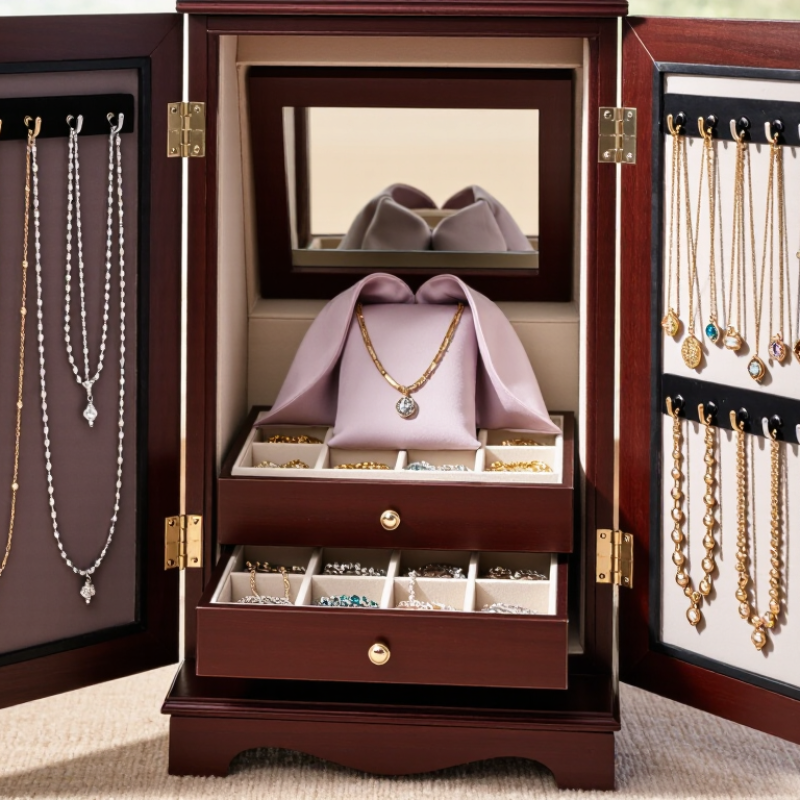
A jewelry armoire can hold many necklaces, but loose chains quickly become a tangled mass. Small hooks installed inside the door create separate hanging spaces. Place shorter hooks near the top and longer hooks lower down. This arrangement prevents pendants from overlapping.
Use sturdy, smooth hooks with rounded edges. Sharp hardware may scratch metal or catch delicate chains. Measure the door before drilling, and leave enough space between each hook. I once placed hooks too closely together, and the necklaces still touched. More hooks did not solve the problem; better spacing did.
Dividers can organize the armoire drawers by chain length, pendant size, or wearing frequency. Soft-lined compartments help protect polished surfaces from small scratches. Keep each necklace in its own section, with the clasp fastened before hanging. This simple habit reduces sliding and knotting. For very fine chains, a narrow divider or individual loop works better than a large open compartment. Inspect the hooks every few months, because loose screws can make jewelry fall unexpectedly. A small label may also help, although labels can become unnecessary clutter. Use the system for a week, then adjust the spacing based on how you actually reach for your jewelry.
A jewelry armoire can make necklace storage simple, but only when every piece remains visible. Use the door hooks for necklaces worn most often. Leave space between them to prevent tangled chains. Longer necklaces need lower hooks, while short pendants can sit higher. This arrangement keeps daily choices quick, even during rushed mornings.
Store delicate chains flat in separate lined compartments. Small removable dividers can create individual spaces for each necklace. Keep similar styles together, such as gold-tone chains, colorful beads, and meaningful pendants. A pale lining makes fine chains easier to spot. Check each clasp before wearing it. A loose clasp can cause an avoidable loss.
Tips: Reserve one hook for tomorrow’s necklace. Place a soft cloth beneath heavier pieces to reduce scratches. Review the arrangement every few weeks, because habits change. I once stored too many necklaces on one hook, and the lower chains became difficult to remove. Less looked better. Also, avoid hiding rarely worn pieces completely; rotate them into view occasionally. That small change can make forgotten jewelry feel useful again.
Arrange necklaces by length to make every piece easier to see and reach. Use hooks for chokers and short pendants, individual slots for princess-length necklaces, and separate rows or compartments for longer matinee, opera, and rope styles. Keep delicate chains spaced apart and fasten each clasp to help prevent tangling.
A jewelry armoire stays orderly when daily care becomes a small habit. I hang each necklace on a separate hook, leaving space between chains. This prevents rubbing, tangles, and pressure on delicate clasps. Shorter necklaces belong near eye level. Longer styles need lower hooks, where they can hang freely.
Care matters more than perfect storage. I wipe each necklace with a soft, dry cloth after wearing it. Skin oils, lotion, and perfume can dull some finishes over time. I also check clasps and jump rings every few weeks. A loose connection is easier to repair before the necklace falls inside the drawer.
Keep moisture away.
I once placed a jewelry armoire beside a bathroom door. That seemed convenient, but the changing humidity affected several pieces. I moved it to a cool, dry wall and added a small moisture absorber nearby. The improvement was noticeable, although I still inspect the cabinet regularly. Storage trays should remain clean, too. Dust can collect beneath chains and leave fine scratches during movement.
Avoid overcrowding the armoire. When hooks are full, remove pieces you rarely wear and store them separately in soft pouches. Do not force a tangled chain apart. Lay it flat, loosen the knot with a fine pin, and work slowly. I sometimes rush this step, which usually creates a worse knot. Patience protects both the necklace and the finish.
Place chokers and short chains on upper hooks. Hang medium and long necklaces below them. Leave space for pendants.
Separate storage reduces scratches, tangles, and surface damage. Delicate chains need soft-lined sections or individual pouches.
Keep frequently worn necklaces near eye level. This saves time during rushed mornings. Convenience matters.
Three or four groups usually work well. Try everyday chains, statement pieces, pendants, and sentimental necklaces. Too many categories can slow you down.
Check it monthly, especially after travel or seasonal changes. Habits change. The system should match real use.
Wipe each necklace with a soft, dry cloth after wearing it. Remove skin oils, lotion, and perfume residue.
Choose a cool, dry wall away from bathroom humidity. A small moisture absorber may help. Keep the trays clean.
Lay it flat and loosen the knot with a fine pin. Work slowly. Do not pull hard. I still rush sometimes, and that makes knots worse.
Remove rarely worn pieces from full hooks. Store them separately in soft pouches. A crowded cabinet defeats the purpose.
Organizing necklaces in a jewelry armoire begins with assessing your collection and the available storage space. Take note of each necklace’s length, design, and condition, then group pieces by style, material, or how often you wear them. A clear sorting system makes it easier to decide which items should remain within reach and which can be stored in less accessible compartments. If you are wondering how to organize necklaces in a jewelry armoire without tangling, using separate hooks, small dividers, and individual sections is an effective starting point.
Install hooks along the armoire’s interior to keep chains hanging straight, and use dividers or soft compartments for shorter necklaces and delicate pendants. Leave enough space between pieces so they can be removed without disturbing others. Arrange frequently worn necklaces at eye level, while occasional pieces can be placed higher or lower. Finally, maintain the system by returning each necklace to its assigned spot, checking for knots regularly, and gently cleaning the storage area to prevent dust and clutter from building up.

Jaydee furniture