Why Floating TV Shelves Are Better for Small Apartments?

Time:2026-10-02 Author:Isabella
0%

Why floating tv shelves are better for small apartments becomes clear when every square inch must work harder. A television console can consume valuable floor space, create visual bulk, and interrupt a narrow walking path. A wall-mounted shelf keeps the floor visible beneath it. That small change can make a studio feel less crowded.

Interior designer William Morris offered a useful principle: “Have nothing in your houses that you do not know to be useful, or believe to be beautiful.” His advice was not written specifically for televisions, yet it fits compact homes remarkably well. A floating TV shelf can serve both purposes. It supports a media player, stores a few remotes, and displays carefully chosen objects without becoming another heavy cabinet.

The practical benefits are measurable. Cleaning becomes easier because dust cannot gather beneath a bulky unit. Open floor area may also help a robot vacuum move through the room. Concealed cable channels can reduce the messy wire cluster behind the screen. However, floating shelves are not magical. The wall must support the bracket, and the shelf must match the equipment’s weight. Poor installation can damage drywall or create a safety risk.

A reliable choice considers stud placement, shelf depth, ventilation, and child safety. One overlooked cable can ruin the clean appearance. Even a beautiful shelf may feel awkward if mounted too high. The best result balances storage, viewing comfort, and honest limitations. That is why floating TV shelves are better for small apartments: they save visual and physical space while encouraging more thoughtful living.
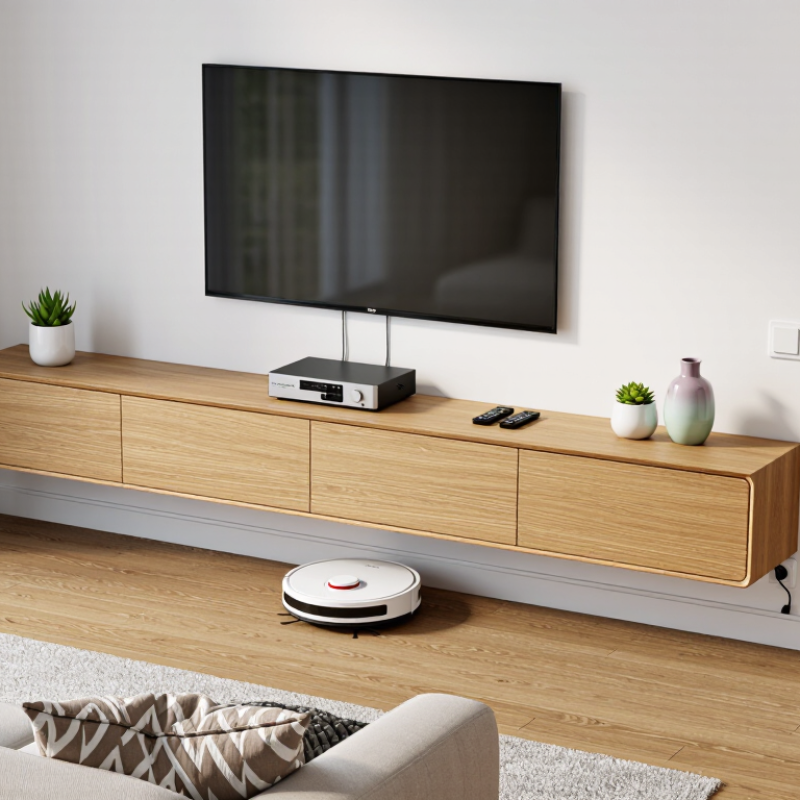
Why Floating TV Shelves Are Better for Small Apartments?

Space-Saving Design: How Floating TV Shelves Maximize Floor Area

Why Floating TV Shelves Are Better for Small Apartments?

Space-Saving Design: How Floating TV Shelves Maximize Floor Area

In a small apartment, floor space disappears quickly around bulky media cabinets. A floating TV shelf keeps the area beneath the screen open. This creates room for storage baskets, a slim chair, or easier cleaning. Every inch matters. The exposed floor also makes the living room feel wider and less crowded.

From practical installation experience, mounting the shelf at a comfortable viewing height improves both appearance and daily use. Measure the television, wall width, viewing distance, and shelf depth before drilling. A narrow shelf can hold a streaming device, remote controls, and small speakers without blocking walkways. Hidden cable channels can reduce visual clutter, but they require careful planning behind the wall. Poor cable placement becomes frustrating later.

Wall strength deserves serious attention. Drywall alone may not support heavy equipment, so locate suitable studs or use hardware designed for the wall type. Check the shelf’s weight rating, including every device placed on it. Safety matters. Floating furniture is not automatically safer or stronger. I once underestimated cable length during a compact installation, leaving a visible loop beneath the screen. It worked, but it looked unfinished. That small mistake showed why flexibility matters, even in a carefully planned space. A slightly deeper shelf may use more wall area, yet it can prevent crowded equipment and improve ventilation.

Visual Benefits: Creating a More Open and Spacious Apartment

Why Floating TV Shelves Are Better for Small Apartments?

In small-apartment layouts, a television often becomes the room’s visual anchor. A bulky media cabinet can make that anchor feel heavier. Floating TV shelves create a cleaner line beneath the screen. Their open space exposes more flooring, which makes the room appear wider and less crowded. Even a few inches of visible floor can change the atmosphere.

The effect becomes clearer near the entryway. When nothing interrupts the sightline below the television, the living area feels easier to enter. Light can travel across the floor instead of stopping against cabinet doors. A slim shelf also reduces visual noise around game consoles, remotes, and small speakers. Hidden cable channels help, but careless wiring can ruin the benefit quickly. It happens more often than people expect.

A practical installation matters as much as appearance. Measure the wall, screen width, and viewing height before choosing a shelf. The shelf should support the equipment and leave comfortable space around the television. Wall construction also deserves attention; masonry and hollow drywall require different fixings. In my experience, shelves placed too high make the wall feel awkward, not open. I once preferred a perfectly centered arrangement, but a slightly lower position looked calmer in a narrow room. The result was not flawless. That imperfection made the apartment feel lived in rather than staged. Keep heavier devices close to the wall, and avoid filling every inch of the shelf. Empty space is part of the design.

Why Floating TV Shelves Are Better for Small Apartments? - Visual Benefits: Creating a More Open and Spacious Apartment

Apartment Living Room Type Typical TV Shelf Width Floor-Standing Console Depth Floating Shelf Depth Floor Area Released* Visible Clearance Below Shelf Visual Benefit
Studio apartment 100–120 cm 35–45 cm 25–30 cm 0.35–0.54 m² 25–35 cm Keeps more visible floor around the TV wall and makes the compact room feel less crowded.
Small one-bedroom living room 120–150 cm 35–45 cm 25–35 cm 0.42–0.68 m² 25–40 cm The continuous floor line improves sightlines between the seating area, walkway, and TV wall.
Narrow living room 120–160 cm 40–50 cm 25–30 cm 0.60–1.00 m² 30–45 cm The reduced projection can preserve circulation space in front of the TV and reduce visual obstruction.
Open-plan micro apartment 140–180 cm 40–50 cm 25–35 cm 0.56–0.90 m² 30–45 cm An unobstructed floor plane helps the TV zone blend with nearby dining, work, or entry areas.
Apartment with limited storage 120–160 cm 35–45 cm 25–35 cm 0.42–0.80 m² 25–40 cm Open space beneath the shelf can accommodate baskets or small storage boxes without creating a solid visual block.

*Floor area released is an approximate calculation based on the console footprint (width × depth) that is avoided by using a wall-mounted shelf. Actual dimensions depend on the room layout, wall structure, TV size, equipment, and installation requirements.

Storage Functions: Organizing Media Devices and Everyday Items

Floating TV shelves help small apartments use wall space without adding bulky floor furniture. Their open design stores streaming devices, game controllers, remotes, and small speakers beneath the screen. This keeps the floor clear and makes cleaning easier. A shallow drawer can hide chargers and spare cables, while labeled boxes hold batteries and manuals. The room feels less crowded, even when several devices are nearby.

In my experience, cable planning matters as much as shelf size. Leave space behind each device for ventilation and easy access. Group cables with reusable ties, but do not bundle them too tightly. Check the wall structure before installation, and follow the shelf’s stated weight limit. I once chose a shelf that was too narrow. It looked neat, but the remote and router had nowhere practical to sit. That mistake changed how I measure storage needs.

Tips: Measure every device before buying. Keep the most-used items within reach. Use one small basket for loose controllers. Leave a little empty space. It helps prevent visual clutter and allows future devices. Avoid storing heavy objects near the edge, especially on a poorly supported wall.

Why Floating TV Shelves Are Better for Small Apartments?

Storage functions for organizing media devices and everyday items on a 120 cm floating shelf.

A 120 cm floating shelf can organize several frequently used items while keeping the floor clear. The capacity estimates are based on common household item dimensions and a shelf depth of approximately 25 cm, leaving space for ventilation and easy access.

Installation Factors: Choosing the Right Wall and Mounting Method

In a small apartment, a floating TV shelf can save valuable floor space. Its success, however, begins with the wall behind it. I have found that a strong-looking surface is not always a strong mounting point. Drywall usually needs screws driven into wall studs, not ordinary plastic anchors alone. Use a stud finder, then confirm the result carefully. Some devices can misread pipes or wiring. Do not trust one signal.

Brick or concrete walls require different fasteners and drilling methods. Choose hardware rated for the wall material and the shelf’s total weight. Include the television, gaming console, speakers, and stored accessories. A shelf that feels light can become surprisingly heavy. That matters.

The mounting method should match the shelf design and the television bracket. A continuous metal rail may distribute weight better than two small attachment points, but only when installed level. Check the manufacturer’s load rating and keep the shelf close to the wall. Leave enough clearance for ventilation and cable bends. Hidden cables look tidy, yet they should remain accessible for repairs. I once placed a power cable too tightly behind a shelf, and removing it later was frustrating. That small gap mattered.

For rented apartments, avoid assuming adhesive solutions can carry electronic equipment safely. They may damage paint and fail under long-term stress. If the wall condition is uncertain, ask a qualified installer to inspect it. A perfectly styled shelf is not useful when its mounting method was chosen by guesswork.

Practical Limitations: Weight, Cable Management, and Maintenance

Why Floating TV Shelves Are Better for Small Apartments?

A floating TV shelf saves floor space and keeps a small room visually open. However, its weight limit deserves careful attention. The total load includes the shelf, television, speakers, consoles, and decorations. A drywall anchor may hold less than expected. Stud-mounted brackets provide a safer foundation. The U.S. Consumer Product Safety Commission estimates about 22,000 emergency-department injuries yearly from television, furniture, and appliance tip-overs. This figure does not target floating shelves alone, but it shows why secure installation matters.

Cable management is another practical limitation. A neat shelf can quickly become a bundle of black wires. Leave ventilation around power adapters and avoid sharp cable bends behind the screen. The International Energy Agency reports that standby power can represent 5–10% of household electricity use. Grouping devices on an accessible power strip may reduce hidden energy waste. It also makes troubleshooting easier.

Dust collects underneath. That area is easy to forget.

Tips: Measure the wall studs before buying hardware. Check the shelf rating against the complete load, not the television alone. Leave a small cable channel for future upgrades. Inspect brackets twice a year for loosened screws, sagging, or wall cracks. A shelf may look stable and still need adjustment. That is an imperfect detail, but small apartments leave little room for failure.

FAQS

How does a floating TV shelf save space in a small apartment?

It keeps the floor beneath the television open. This space can hold baskets, a slim chair, or cleaning tools.

Can a floating shelf make a room look larger?

Yes. Visible flooring and clear sightlines create a wider, calmer impression. Even a few inches can change the room.

What should I measure before installation?

Measure the wall width, television size, viewing distance, shelf depth, and comfortable viewing height. Measure twice.

How much weight can a floating TV shelf hold?

Check the shelf rating against the complete load. Include speakers, consoles, adapters, decorations, and the television.

Can drywall safely support a floating TV shelf?

Drywall alone may be weak for heavy equipment. Locate wall studs or use fixings suitable for the wall structure.

How can I hide cables effectively?

Plan cable routes before drilling. Leave a small channel for future devices, and avoid sharp bends behind the screen.

How much space should equipment have on the shelf?

Leave room around adapters and consoles for airflow. A slightly deeper shelf may prevent crowding and overheating.

How often should I inspect the shelf?

Check the brackets twice yearly. Look for loose screws, sagging, wall cracks, or movement. A stable shelf can still need adjustment.

What common installation mistake should I avoid?

Do not underestimate cable length. A visible wire loop can make a tidy installation look unfinished.

Should every inch of the shelf be filled?

No. Empty space reduces visual noise and makes the apartment feel less crowded. Perfect symmetry is not always better.

Conclusion

Why floating tv shelves are better for small apartments becomes clear when space and organization matter most. By attaching the shelf to the wall, the design keeps the floor open, making it easier to move around and creating a cleaner, less crowded appearance. The visible gap beneath the shelf also helps the apartment feel more spacious, while the simple structure can complement different interior styles without overwhelming the room.

A floating TV shelf provides practical storage for media devices, controllers, books, and everyday items, helping reduce clutter. However, installation should be planned carefully by selecting a suitable wall and using a mounting method that matches its structure. It is also important to check the shelf’s weight capacity, keep cables organized, and leave enough access for maintenance. With proper planning, a floating TV shelf can combine efficient storage, visual openness, and everyday convenience in a compact apartment.

Isabella

Isabella

Isabella is a dedicated marketing professional with a sharp focus on driving brand growth and engagement through strategic content creation. With an extensive background in digital marketing, she combines her passion for storytelling with her keen understanding of industry trends to deliver......